In late 2024 I broke. Not dramatically. Nobody saw it. I made every meeting, hit every deadline, and was at the gym four mornings a week. From the outside, I looked like a man with his life together. From the inside, I was a brittle, irritable husk who hadn't laughed at a joke in three months and was getting up at 3:42 a.m. to lie in the dark calculating whether I could quit my career and move to a cabin.
That's high-functioning burnout. It's not a diagnosis, it's a slope, and the people most likely to slide down it are the people who got told their whole life they were "the responsible one." The reason it's dangerous is that it hides. You keep showing up. The bills get paid. The kids get dropped off. And meanwhile your nervous system is running a marathon every day, your hormonal panel is drifting south, and at some point your body stops asking and starts insisting.
What follows is what I did about it. Six weeks of sequential interventions, each layered on the last, all measurable, mostly cheap, and nothing radical. I don't claim it'll work for everyone. I claim it worked for me and that the underlying logic — physiological recovery first, behavioral changes second, supplements last — generalizes.
If you came here because you suspect you're in a similar place, read the whole thing before you start. The order matters.
The burnout I'm talking about (and not talking about)
I'm talking about high-functioning, chronic-stress, sympathetic-overdrive burnout. The kind that builds over years of overdrawing the bank account of your nervous system. Symptoms include:
- Persistent low-grade fatigue that coffee doesn't fix
- Disrupted sleep, often with 3-4 a.m. wakeups
- Loss of pleasure in things you used to enjoy
- Irritability, especially at people you love
- HRV in the basement, resting heart rate creeping up
- A sense that everything is a chore, even good things
- Mild anxiety, mild low mood, but not severe enough to feel like "depression"
- Increasing dependency on alcohol, caffeine, scrolling, or all three
I am not talking about clinical depression, anxiety disorders, or PTSD. Those need professional care. If your symptoms include hopelessness, persistent suicidal ideation, or you're losing function in major life domains, please skip the gear and talk to a clinician now. 988 in the U.S. The phone works.
I'm also not talking about acute burnout — the "I just finished a huge project, I need a vacation" kind. A week off the grid will fix that. Chronic burnout doesn't yield to a vacation. I tried. I came back, looked at the inbox, and was wrecked again in 48 hours.
The TL;DR
Six weeks, four moves:
- Sleep first. Two weeks of nothing but fixing sleep. Cold dark room, hard wake time, no screens after 9.
- Add cold. Week 2-4, introduce cold plunge three to four times a week. Short, controlled, not heroic.
- Add sauna. Week 3-5, layer in sauna three to five times a week. Evenings.
- Add Zone 2. Week 4-6, easy aerobic base, three to four times a week, 45 minutes.
And cut, on day one:
- Alcohol, 60 days minimum.
- Caffeine over 200 mg / day.
- Doom-scrolling and news at night.
- Any "productivity hack" that asks you to optimize harder.
That's the entire protocol. The rest of this article is the details, what I tracked, what didn't help, and the maintenance routine I've kept since.
My burnout story (composite, anonymized)
October 2024: I'd been doing 11-hour workdays for nine months in a stretch that included a move, a death in the family, and a project that required, in retrospect, two people. I told myself I'd "rest after Q4." I'd told myself the same thing the Q4 before. I was 5'10", a relatively lean 175 pounds, training four days a week, eating clean, not doing anything I considered abuse. By external standards, I was a high performer. By internal standards, I was a man who hadn't enjoyed his Saturday morning in two years.
The break came in three signs:
- My Oura readiness scores collapsed. I went from a 75-day median 84 down to a 60. HRV dropped 32%. Resting heart rate climbed seven beats.
- I stopped reading. I'm someone who reads two books a month, has since I was a teenager. For most of September and October I read zero. Not "less." Zero. I'd open a book, look at it, and put it down.
- I started getting angry at small things. A miscut delivery. The dishwasher noise. The kid's screen-time question. Disproportionate. I knew, while I was doing it, that it was disproportionate. I just couldn't catch the wave before it broke.
The clarifying moment, for me, was when my wife asked, gently, when I'd last had a day I actually enjoyed. I genuinely couldn't remember.
I'm telling you this not because my story is unusual. I'm telling you because it's so usual it's almost embarrassing. The version of high-functioning burnout I'm describing is the modal experience of competent, conscientious mid-career adults in 2025. If any of it sounds like you, you're not unique. You're on a slope.
The protocol I describe below is what I did the next morning, and what I kept doing for six weeks. By the end of November I had my readiness back. By January I was, for the first time in years, sleeping through the night without waking. By February I noticed I'd laughed three times in a single dinner.
The 6-week protocol
The principle: stack interventions sequentially. Don't try to do everything in week one. Burnout brains can't sustain a six-front war. Give each addition a chance to take root before adding the next.
Week 1-2: Sleep gets fixed first
I cannot stress this enough. Nothing else works if sleep is broken. I spent the first two weeks of recovery doing essentially one thing: rebuilding a sleep environment and a sleep schedule.
What that looked like:
- Hard wake time, seven days a week. I picked 6:15 a.m. and kept it through weekends. No "catching up." Catching up is what kills the rhythm.
- In bed by 9:30 p.m., lights out by 10. Whatever I hadn't finished, I wasn't going to finish in a brittle nervous system.
- Bedroom at 64°F. This is the part where, honestly, the [Eight Sleep Pod 4](/sleep/eight-sleep-pod-4-review/) earned its money. I'd been on the fence about it for two years. In burnout recovery it was non-negotiable. The mattress let me cool below ambient room temperature, which is what core-temp drop for sleep onset actually requires. If you don't want to spend that much, a window AC unit set to 65 and a wool blanket works fine. The temperature isn't optional. The mattress is.
- Blackout everything. Even the small LED on the cable box got electrical tape.
- No screens in bed. Books only. If I couldn't focus on a book (often, in week 1), I'd just lie there. Sleep is not optional. Reading is.
- Magnesium glycinate, 350 mg, 60 minutes before bed. (Best magnesium for sleep for the why and which.)
Eight Sleep Pod 4
Pod 4 base unit; Pod 4 Ultra adds adjustable base. Subscription required.
$2,649 Check current price at Eight SleepThat was the whole intervention for weeks one and two. No new training. No new supplements. No fancy gadgets except the mattress. Just sleep.
Results, by the end of week 2: HRV up ~18% from the floor. Resting heart rate back down four beats. I started, for the first time in months, waking up not feeling like I'd been wrestling all night.
If you're tempted to skip ahead — to add the cold plunge in week one because it sounds more impressive — don't. The order is the medicine. Sleep is the foundation everything else is built on.
Week 2-4: Add cold plunge
Starting in week three, I added cold exposure. Specifically: 2-3 minute plunges at 48°F, three to four times a week, always in the morning, never within six hours of bedtime.
Why cold? Two reasons. First, the catecholamine response (dopamine, norepinephrine) is acutely mood-elevating in a way that, for a depleted nervous system, feels like getting a piece of yourself back. Second, the daily practice of stepping into something hard and staying calm is, mechanistically, training for parasympathetic regulation. You're teaching your body that you can keep your breath in the face of stress. That generalizes.
The setup: I'd had a Plunge cold tub in the garage for two years and used it sporadically. Now it was every morning. If you don't have a tub, the DIY chest freezer plunge works fine, and the cold plunge guide covers the full set of options.
The protocol: 48°F, 2-3 minutes, slow nasal breathing, no heroics. The full set of dose-response considerations is in cold plunge protocols. The mistake in burnout recovery is going too cold or too long; both spike cortisol in a system that's already drowning in it.
By end of week 4, my morning cortisol curve looked normal again on testing. (More on testing in a minute.) My subjective experience: the first 15 minutes after a plunge, I felt better than I'd felt at any point in the previous year. That feeling extended, gradually, into longer and longer parts of the day.
Week 3-5: Add sauna
Starting in week three, in parallel with cold, I added evening sauna. Three to five sessions per week, 20-25 minutes per session, traditional sauna at 180-190°F.
Sauna in burnout recovery does three things that matter. First, the heat-shock response upregulates a class of proteins involved in protein repair, which is metabolically what a depleted body needs. Second, the post-sauna cooldown produces a strong parasympathetic rebound — a kind of forced rest state that, in a brain that's forgotten how to rest, is genuinely therapeutic. Third, the practice itself becomes a sacred, screenless 25 minutes. That last point is not nothing.
The setup: I'd built out a small indoor sauna a year prior. If you're starting from scratch, the home sauna guide covers what's worth what. If you have access to a gym sauna, that works fine — the [Higher Dose sauna blanket](/sauna/higher-dose-sauna-blanket-review/) is a real option for renters and travelers, and for the contrast-protocol case, my sauna and cold plunge protocol is the layering guide.
HigherDOSE Infrared Sauna Blanket V4
Sauna we've spent real time inside — read our review for the verdict.
$699 Check current price at HigherDOSEThe trade-off in burnout recovery: don't do sauna and cold in the same hour. The contrast protocols are great when you're healthy. When you're depleted, alternate days, or at minimum put six hours between them. Stack the parasympathetic rebound at night.
Week 4-6: Add Zone 2 cardio
By week four, I'd had two solid weeks of sleep, two weeks of cold, and a week or two of sauna. Now I could start adding training back — but not the training I'd been doing before.
Pre-burnout, I'd been doing four hard strength sessions a week plus two HIIT classes. In retrospect, that was part of what got me here. Hard training without recovery is fuel for sympathetic dominance. So for weeks four through six, I dropped the hard stuff entirely and added pure Zone 2.
Zone 2 means easy aerobic — heart rate in the 60-70% of max range. For me, around 130 BPM. You can hold a conversation in full sentences. You're sweating gently. You feel, mostly, like you could keep going forever.
Three to four 45-minute sessions a week. Treadmill incline walks, easy bike rides, slow trail runs. Boring. Effective. The metabolic and parasympathetic adaptations from Zone 2 are slower than HIIT, but they're the ones that actually rebuild a depleted system. Heavy training came back in week 7, gradually.
If you're an athlete trying to come back from over-training as a flavor of burnout, my recovery stack for athletes goes deeper on the periodization piece.
What I cut
In parallel with what I added, on day one, I cut things that were silently making the burnout worse. None of these were dramatic. All of them, in retrospect, mattered.
Alcohol, 60 days minimum. I'd been a "one or two drinks with dinner" guy. The data on what one or two drinks does to deep sleep is, frankly, embarrassing for the wine industry. Sixty days off was, by my own tracking, the single highest-leverage cut I made. HRV came up. Sleep efficiency came up. Mood came up. I don't drink as much now, even a year and a half later, because I no longer want to.
Late nights. I had a habit of doing "one more hour" of work after the kids were in bed. Cut. Hard 9:30 p.m. shutoff. The work didn't suffer. I'd just been pretending the late hours were productive.
Doom-scrolling. Twitter, news sites, the works. I deleted the apps. Looked at headlines on my laptop once a day, at noon, for ten minutes. The world did not collapse. My sleep got better.
"Productivity hacks." This was the counterintuitive one. In burnout, the part of you that wants to "solve it" wants to optimize harder. Time-blocking, Pomodoros, advanced GTD systems. Cut all of it. The problem wasn't that I wasn't squeezing enough juice out of each hour. The problem was that I was juicing twelve hours when I had eight. More efficiency was the disease, not the cure.
Comparison content. Influencer feeds, hustle-porn newsletters, the "5 a.m. club" stuff. Unfollowed. Burnout brains can't metabolize comparison.
What I added (beyond the four pillars)
A few small things, layered in over the six weeks, that helped:
Morning sunlight, ten minutes a day. Outside, no sunglasses, within 30 minutes of waking. The circadian piece is the most cost-effective intervention in this whole stack.
Magnesium glycinate at night. Already mentioned. The best magnesium for sleep guide has the doses and forms.
An honest evening shutdown. A short walk after dinner. No phone. With my wife, when she's around. This is the part of the routine that wasn't measurable but mattered more than most of the measurable parts.
Breath work, three minutes, twice a day. Physiological sighs in the morning, 4-7-8 at night. Free. Effective. Detailed in my recovery stack for anxiety.
Saying no. Not in a heroic way. Just systematically: no to optional meetings, no to dinners that didn't make me happy, no to the half-committed yeses I'd been spreading across my life. This wasn't a single decision. It was a habit. It took the whole six weeks to install.
The role of testing
I'm not going to recommend you spend a thousand dollars before you start. Most of what works for burnout recovery is free or cheap. But, for me, getting baseline blood work helped, both for diagnostic clarity and for tracking improvement.
What I ran:
- A full Function Health panel. A comprehensive 100+ biomarker panel that included thyroid, free testosterone, fasting insulin, ApoB, hs-CRP, ferritin, vitamin D, and a stress-related hormonal panel. My full take is in the Function Health review.
- InsideTracker as a comparison run a month later. (InsideTracker review.)
- A 14-day continuous glucose monitor to see what my metabolic state actually looked like during the burnout period. Most of my glucose was fine, but my overnight variability was much higher than I'd expected, which tracked the cortisol pattern. (Best CGM for non-diabetics.)
What the testing revealed: my fasting cortisol was high-normal, my testosterone was lower than baseline by about 25%, my hs-CRP was creeping up, my ferritin had dropped, and my fasting insulin was higher than I expected for someone in my weight class. Nothing was outside the lab "normal range." Everything was outside my normal range. That distinction matters.
If you can afford one test, run a baseline panel before you start. The number doesn't need to be a crisis to be worth fixing. The full overview is in the at-home health testing guide.
Burnout-specific HRV patterns
If you have a wearable, burnout has a signature. It's not subtle once you've seen it.
Resting heart rate creeps up over weeks, usually 5-10 BPM above your baseline.
HRV drops progressively, often 25-40% off baseline over the burnout descent.
Recovery scores stay flat or red even on days you "did everything right" — slept eight hours, didn't drink, trained moderately. This is the giveaway. A nervous system that no longer responds to good inputs is a system that's depleted its capacity to respond.
Sleep stages distort. Deep sleep collapses first. REM follows. Total time in bed stays the same, but the architecture is wrong.
Day-to-day variability collapses. A healthy nervous system swings — sleep is good some nights, less good others. A burned-out one goes monotone. Every day is the same mediocre.
I tracked all of this on Oura, with a second wrist on Whoop for a stretch of months. The Oura vs. Whoop comparison covers which I prefer and why. For burnout specifically, I lean Oura: HRV during sleep is the most stable signal, and Oura measures it well. Whoop is better for athletic training load, which is the secondary problem in burnout recovery, not the primary one. The full recovery wearable guide covers the broader category.
The reason this matters: data argues with you when your brain lies. The burned-out brain is incredibly good at telling itself stories. "I'm fine. It's just been a busy week. I'll catch up Sunday." The watch on your wrist doesn't tell stories. When my Oura readiness was averaging 60 for three weeks, no amount of "I'm fine" was going to argue with it.
What I dropped
Things I tried in the burnout-recovery window that didn't help, or that I dropped after testing:
- Adaptogen blends. A multi-herb "stress support" formula. Nothing measurable in either direction.
- High-dose vitamin C IVs. Trendy. Expensive. No noticeable effect.
- NAD+ supplementation. I'll write more on this in best NAD supplement. Some subjective signal, hard to disentangle from the rest of the protocol. Not the pillar people pretend it is.
- Glycine, GABA, valerian. Tried each. Mild for one (glycine). Useless for the others.
- "Smart drug" nootropics. Already off them. In burnout recovery they're a particularly bad idea.
- Aggressive supplementation in general. I went from 14 daily supplements to four (magnesium, omega-3, vitamin D, creatine). I felt better with fewer.
- Heart-rate-variability biofeedback apps. Useful as a breath-work cue. Not transformative. Replaced with five minutes of physiological sighs.
- Cold showers as a substitute for the plunge. Not the same intervention. Different temperature, different duration, different effect. Fine as a supplemental thing. Not the pillar.
The maintenance routine
A year and a half post-burnout, here's what I've kept:
- Sleep: still the foundation. Cold dark room, hard wake time, mattress cooling, 7.5-8 hours.
- Cold plunge: 3-4 times a week. Same protocol. 2-3 min at 48°F.
- Sauna: 3-4 times a week. 20-25 min.
- Training: now back to two strength sessions, three Zone 2 sessions, one optional harder day. Lower training volume than pre-burnout. Better results.
- Caffeine: capped at 200 mg, cut by 10 a.m.
- Alcohol: 3-4 drinks a week, never in the three hours before bed.
- Supplements: magnesium glycinate, omega-3 (best omega-3 supplements), vitamin D, creatine, occasional L-theanine.
- Testing: annual Function Health, quarterly Oura download review.
- Boundaries: no work past 6 p.m. unless an explicit deadline. No phone in bed. No email on weekends.
- Light: ten minutes of morning sunlight. Dim overhead lights after sunset. Red-light panel two to three times a week, mostly for the discipline of being in a dim room rather than the photons. (Red light therapy guide.)
That maintenance routine takes about 90 minutes of dedicated time per day. It is, year over year, the single best return on time investment I've ever made.
When this isn't enough
If you do this protocol for eight weeks and you're still in burnout, the problem isn't the protocol. The problem is upstream. The most common upstreams I've watched people miss:
The job is the problem. No amount of sauna fixes a job that demands more than you have. Sometimes the right move is changing the work. The protocol can give you the bandwidth to make that move; it can't substitute for it.
The relationship is the problem. Same logic.
There's untreated depression or anxiety underneath. The protocol helps. It's not a substitute for therapy or, where appropriate, medication. SSRIs are not the boogeyman. Treatment-resistant cases are well-served by combining clinical care with the protocol.
There's an underlying medical issue. Thyroid, low testosterone, sleep apnea, autoimmune. This is why I'd run the baseline blood work. A 350 ng/dL testosterone reading isn't going to be fixed by cold plunges.
You're in a season that requires endurance, not optimization. Newborn baby. A parent dying. A startup year. Sometimes the answer isn't to recover. The answer is to survive and to have the protocol waiting on the other side.
FAQ
How long until I'll feel better?
By the end of week 2 (sleep alone), most people feel noticeably better. By the end of week 6, dramatically. Full recovery, by my data and by what I see in friends, takes about three to four months. The protocol installs in six weeks; the nervous system retunes over months.
Do I need all the gear?
No. The most important interventions are free or cheap: sleep, sunlight, breath, caffeine reduction, Zone 2 walking, alcohol cut. Cold plunge and sauna add real value, but if budget is tight, do the cheap stuff first. A gym membership with a sauna covers most of it. A cold shower is not a substitute for a plunge, but it's not nothing.
Can I do this while still working full time?
Yes. I did. The whole point of the protocol is that it doesn't require a sabbatical. Ninety minutes a day, four pillars, and a hard 6 p.m. cutoff.
What about therapy?
Most people recovering from burnout benefit from therapy or coaching, full stop. The protocol is the physiological piece. Therapy is the psychological piece. They're complementary, not competing.
What's the role of "purpose" and meaning?
Burnout is partly physiological and partly existential. The protocol fixes the physiology. The existential piece — what you're doing this all for, who you're doing it with, whether the life you've built reflects what you actually value — that's the other half. The protocol creates the bandwidth to ask those questions. It doesn't answer them.
Is "burnout" even a real diagnosis?
Not in the DSM as of this writing, but the ICD-11 lists it as an occupational phenomenon. The lived reality of it is well-documented in the medical literature regardless of how we label it.
Will I burn out again?
Maybe. The maintenance routine reduces the risk. The bigger insurance policy is learning to read your own signals — HRV, sleep, irritability, loss of pleasure — early. The cost of acting on the signal at 80% is small. The cost of ignoring it until 30% is enormous.
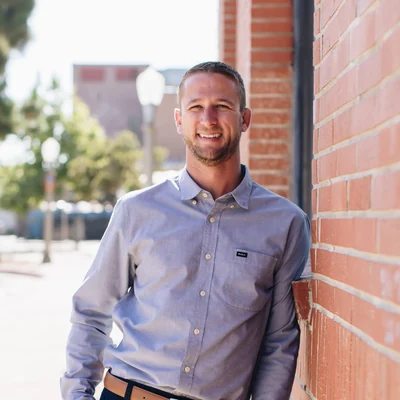
Trevor Kaak
Founder, RecoveryStack · Engineer · Endurance athlete
Long-distance runner training for an Ironman. Tests recovery gear in his garage workshop and inside real training cycles. Mechanical engineer by background. Bought every product on this site at retail.
More from TrevorLast verified May 15, 2026 · Bought at retail · used in our garage and outdoor deck · purchases predate the review · Affiliate links disclosed in our policy.